Booking choice: The Uluru sunrise and Kata Tjuta morning by coach, with free cancellation up to 24 hours before. Book this Compare the options below
Uluru is in the middle of the Australian desert, and the temperature decides a lot about a visit: which walks are open, how early you need to start and what you pack. The figures in this guide come from the Bureau of Meteorology station at Yulara Airport and from Parks Australia.
In short, winter is mild by day and cold by night, summer is hot with flies and storms, and spring brings wildflowers. A good trip is possible in any month, as long as you plan your walks around the heat.
The quick answer
The best months for Uluru are May to September, when Parks Australia says daytime maximums are usually between 20C and 30C. June and July are the coolest, with mean maximums of about 20.5C to 20.8C and cold nights. October to March can be extremely hot, with days regularly over 35C, and heat rules close parts of some walks. August and September bring wildflowers; summer brings flies.
What is the best month to go to Uluru?
Between May and September. Parks Australia says this is when the daytime maximum is usually between 20C and 30C.
These months make long walks comfortable. The 10.6 km Uluru Base Walk, the Valley of the Winds at Kata Tjuta and the Kings Canyon Rim Walk each take several hours on foot, and cooler days make them far more pleasant. Winter, from June to August, is also the most popular time to visit Kings Canyon, per Northern Territory tourism.
The trade-off is cold nights, which matter if you are camping. If you can choose freely, September is a good compromise: a mean maximum of 28.9C at Yulara, warmer nights than midwinter and wildflowers. For how long to stay, read how many days you need at Uluru.
How hot and cold does it get at Uluru?
Very hot in summer and cold at night in winter. January's mean maximum at Yulara is 38.6C; July has the coldest nights, with a mean minimum under 5C.
The table shows mean daily maximum and minimum temperatures for selected months at Yulara Airport, from the Bureau of Meteorology. The annual mean maximum is 30.3C.
Winter days are mild, with mean maximums of 20.5C in June and 20.8C in July, but nights are cold. Temperatures below freezing have been recorded from June to September, and the record low is in July. Rain is light, about 267 mm a year, with December the wettest month and August the driest.
| Month | Mean max | Mean min | What it means |
|---|---|---|---|
| January | 38.6C | 23.1C | Hottest month; start walks at dawn |
| March | 34.8C | 19.7C | Still hot; heat closures possible |
| April | 30.0C | 14.6C | Cooling down, warm days |
| September | 28.9C | 10.8C | Mild days, wildflowers |
| October | 32.7C | 15.3C | Heat returns |
| December | 36.8C | 21.1C | Very hot and the wettest month |
When should you avoid Uluru?
If you dislike heat, avoid October to March. Parks Australia says daytime temperatures regularly exceed 35C in those months.
Yulara averages 35.7 days a year at or above 40C, including 12.3 in January, and the highest temperature recorded there is 47.1C, in December. On hot days, the safe window for walking is short: Parks Australia advises against walking after 11:00am in summer and recommends avoiding the hottest period, 2:30pm to 6:30pm.
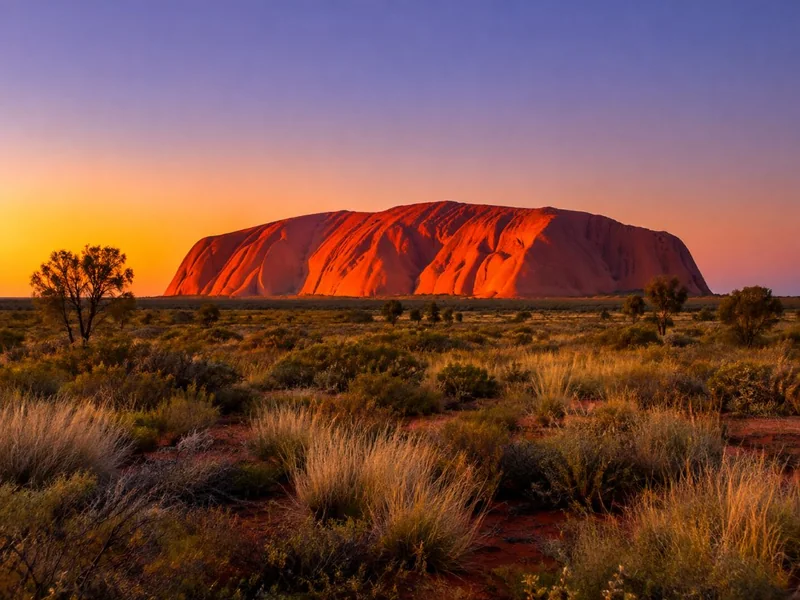
Summer has rewards too. Storms fill the waterholes and can start Uluru's waterfalls flowing. If you visit then, plan around sunrise. The sunrise coach trip reaches Talinguru Nyakunytjaku for sunrise, walks Walpa Gorge at Kata Tjuta and returns to Yulara after about 5 hours.
Uluru sunrise and the Walpa Gorge walk at Kata Tjuta in a 5-hour morning trip from Yulara.
Book thisWhich walks close in hot weather?
Several walks close or restrict access on hot days. The thresholds are 36C at Kata Tjuta and Kings Canyon, and 40C for two walks at Uluru.
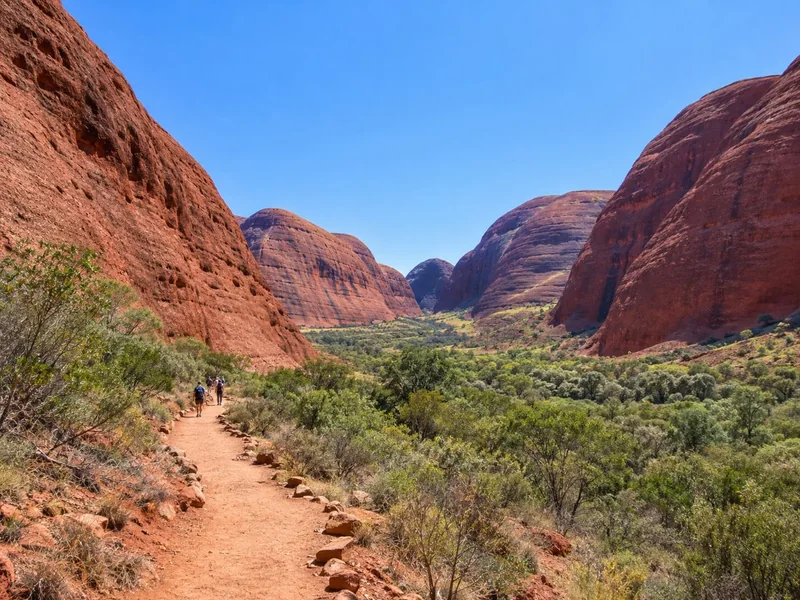
- Valley of the Winds, Kata Tjuta: from 11 am on days when the forecast or actual temperature reaches 36C or above, the walk closes at the first lookout, Karu Lookout. The walk to Karu stays open; beyond it is closed.
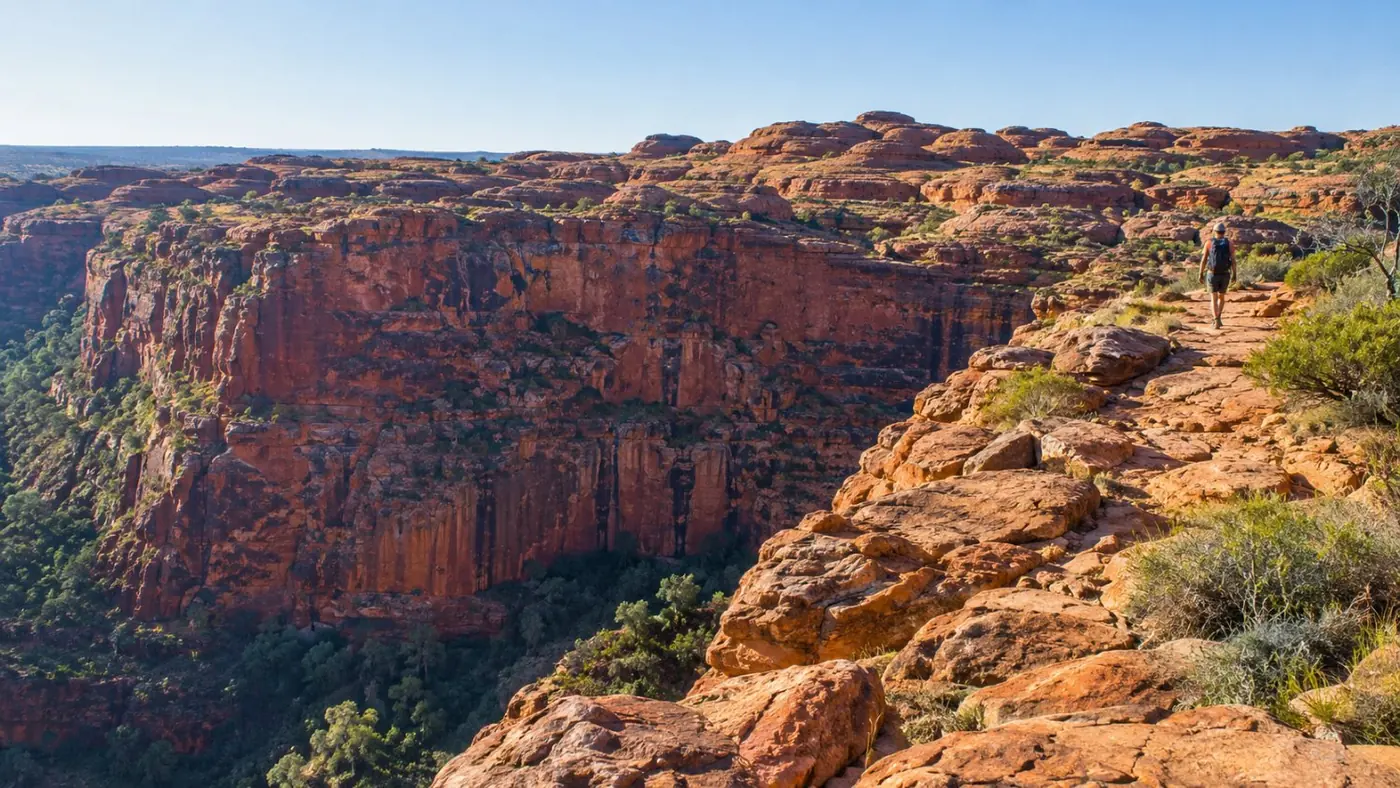
- Kings Canyon Rim Walk: on days forecast at 36C or above, you must start before 9am, and you will not be allowed to start after 9am.
- North-east Walk, Uluru: closes for the day from 11am when the forecast or actual temperature reaches 40C or above.
- Lungkata Walk, Uluru: closes for the day from 2pm at 40C or above.
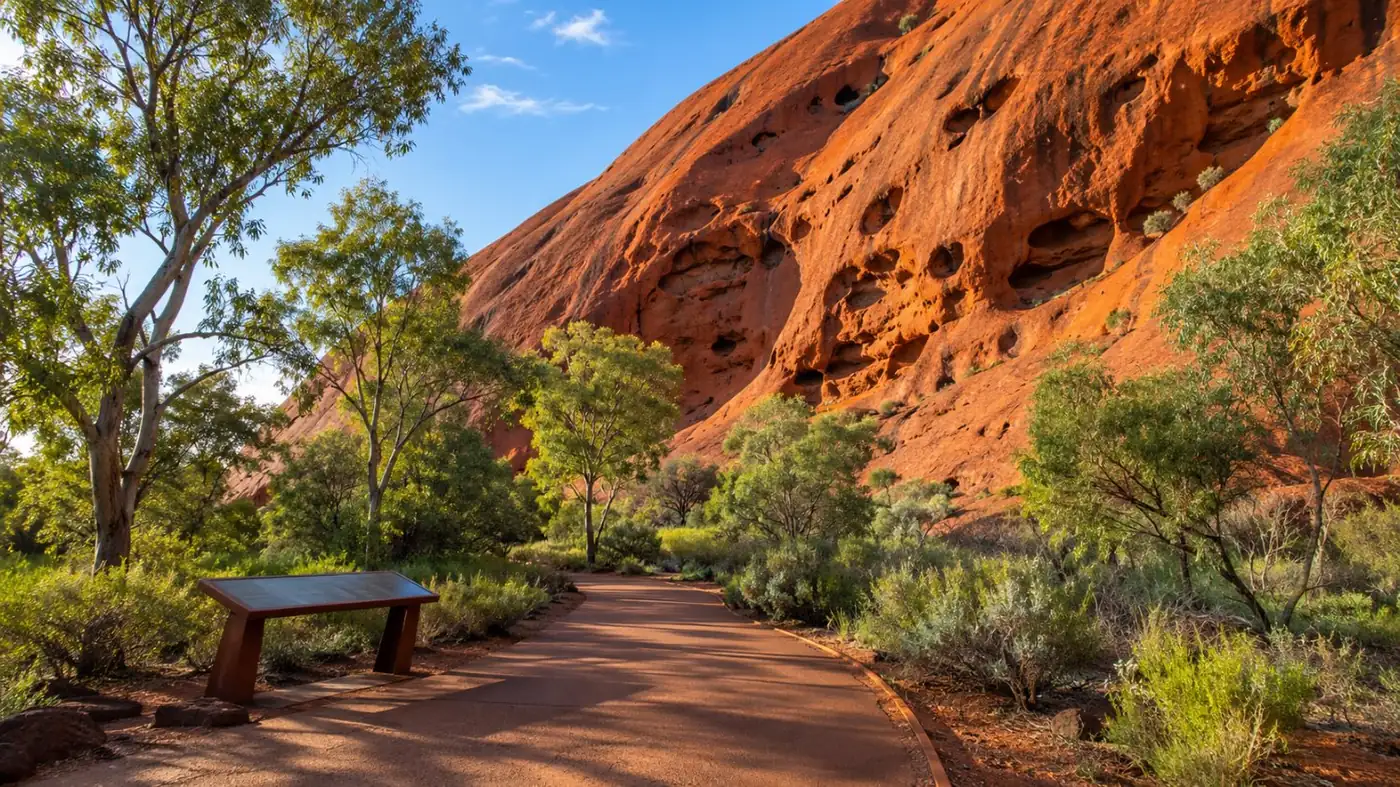
On the Uluru Base Walk, Parks Australia notes that some tracks close in the afternoon in summer because of the risk of heat stroke, and advises finishing before 11:00am in hot weather. Details of the walks are in walking around Uluru.
How cold are winter nights in the desert?
Cold enough to need warm layers. Parks Australia warns that winter nights can be very cold, and Yulara has recorded temperatures below 0C in June, July, August and September.
A few nights a year at Yulara fall to 0C or below, mostly in July. That matters most on camping tours, where you sleep in a swag or eco-tent. The 3-day camping tour's listing asks guests to bring warm clothes, a torch and a 3-litre water bottle, and its sleeping bag is included.
Early starts are cold too. Sunrise tours leave in the dark, so bring a jacket even if the afternoon will be warm. The small-group base walk starts about an hour before sunrise and serves tea and coffee with its picnic breakfast.
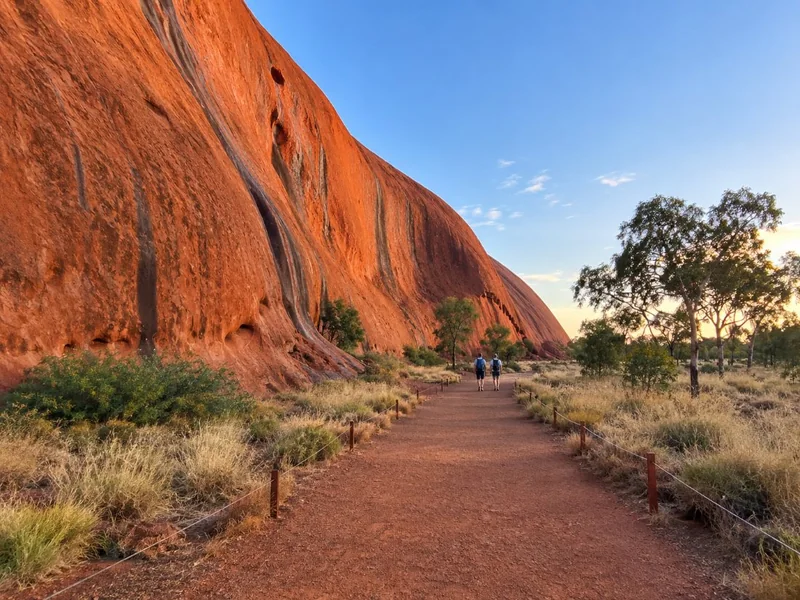
Watch the sunrise, then walk the full base of Uluru with a group of 11 at most and a picnic breakfast.
Book thisWhen are the wildflowers, and when are the flies bad?
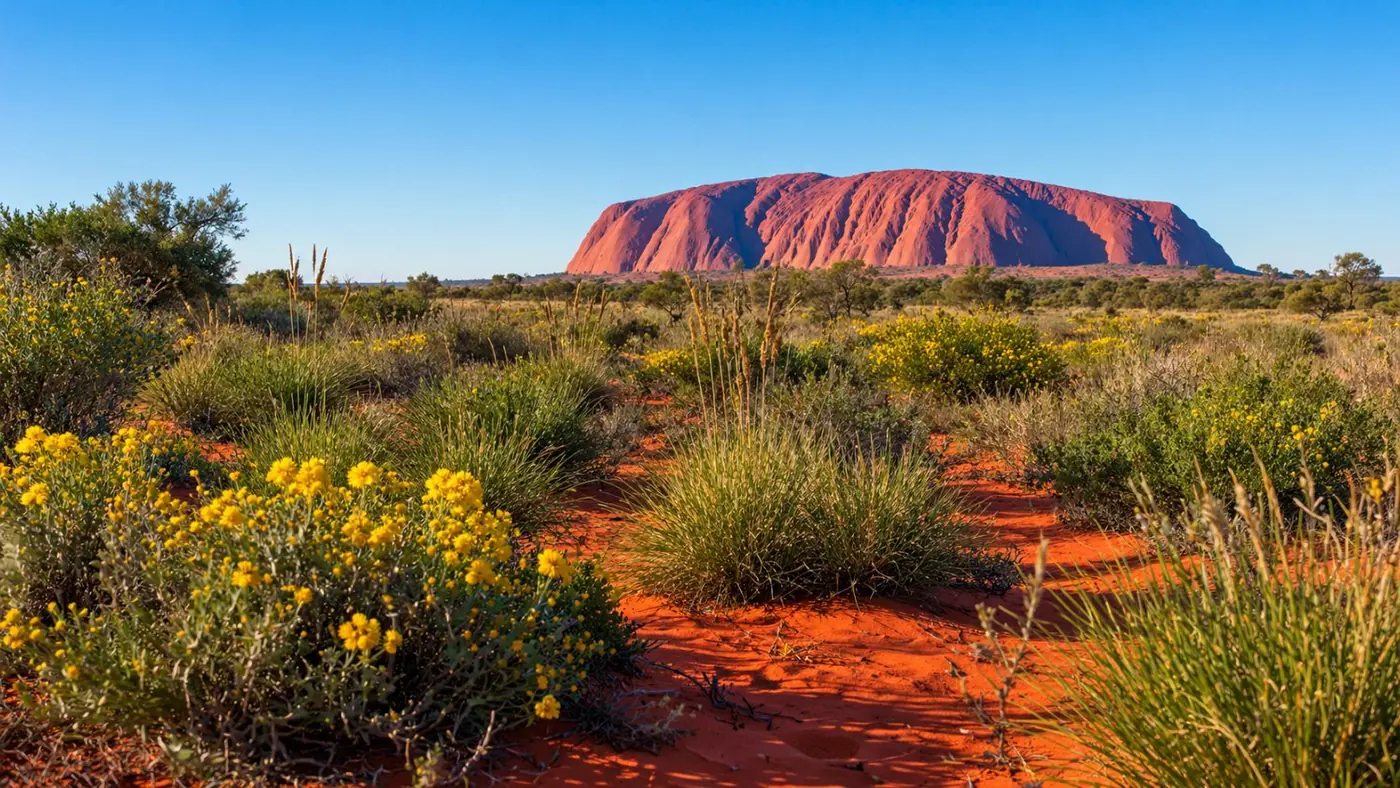
Wildflowers come in August and September. Flies arrive in large numbers in summer, and Parks Australia suggests a protective head net.
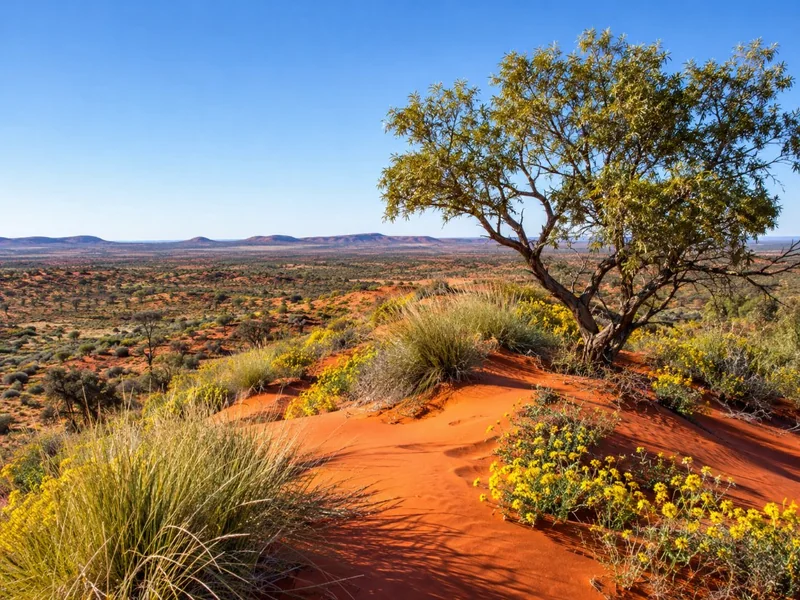
Parks Australia notes that August and September bring wildflowers, which makes them a strong choice for photographers. More than 400 plant species grow in the park.
In summer, the flies can be relentless. A head net is light to pack and makes walks more pleasant; the Rock to Rock camping tour lists fly nets among its inclusions.
What time does the park open?
Opening hours change by month, from 5:00am in summer to 6:30am in midwinter. The park is open every day of the year, and visitors must leave by closing time.
In January the gates open at 5:00am and close at 9:00pm; in June and July they open at 6:30am and close at 7:30pm. That is why sunrise tours have earlier pickups in summer. The Cultural Centre is open 7:00am to 5:45pm daily. The full monthly table of gate times is in the Uluru walking guide.
A park pass is required for entry. Buy it online, or at the entry station if you cannot buy online, and scan its QR code at the gate. Visitors under 18 enter free.
What should you be careful of in the Red Centre?
Heat, water and roads. Carry and drink at least one litre of water per person per hour, walk with another person, and avoid driving at night where possible.
- Water: Parks Australia advises at least one litre per person per hour, and to avoid sports drinks, diet cordials and caffeine.
- Heat: do not use tracks closed because of heat. NT parks advice is to consider postponing a walk above 32C.
- Emergencies: most walks have emergency radios. Call 000 or 112 from a mobile.
- Wildlife: never touch or feed dingoes. Keep your distance from a king brown snake (liru).
- Driving: roads are often unfenced, with kangaroos, cattle, horses and camels. Slow down and sound the horn rather than swerve, and avoid night driving where possible. Road trains can be over 50 m long.
If you would rather leave the driving to someone else, choosing a Red Centre tour compares the options.
A 3-day camping loop of Uluru, Kata Tjuta and Kings Canyon, with a guide, all meals and park entry included.
Book thisFrequently asked questions
What is the best month to visit Uluru?
Parks Australia recommends May to September, when daytime maximums are usually between 20C and 30C.
Does it get cold at Uluru?
Yes, at night in winter. Yulara has recorded temperatures below 0C from June to September, so bring warm layers.
Do walks close in summer?
Some do. Parts of the Valley of the Winds close from 11 am at 36C, the Kings Canyon Rim Walk must start before 9am on 36C days, and the North-east and Lungkata walks close at 40C.
When are the flies worst?
In summer. Parks Australia suggests wearing a protective head net.
Ready to book
Choose your Red Centre tour
Free cancellation on every option; the cut-off is on each card. Booked on GetYourGuide.
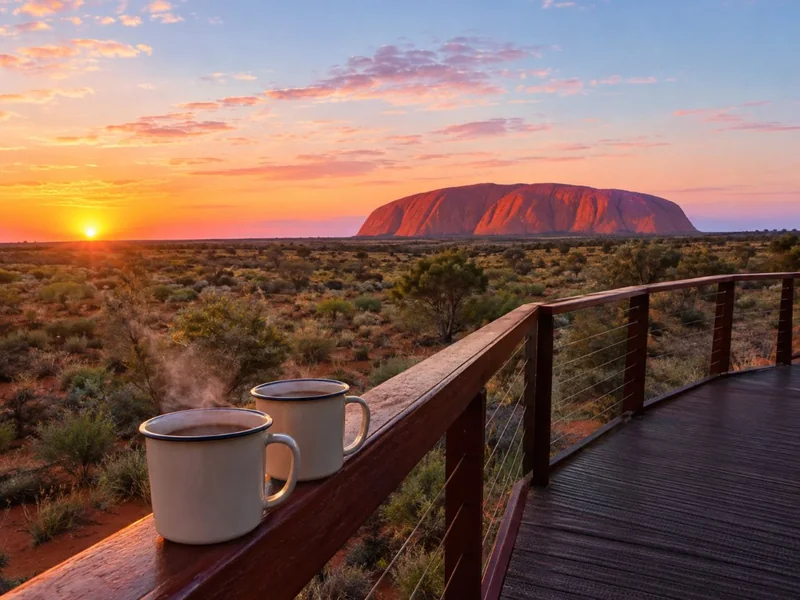
Uluru Sunrise & Kata Tjuta Morning by Coach
- Pickup and drop-off at Ayers Rock Resort in an air-conditioned coach
- Uluru sunrise at Talinguru Nyakunytjaku with tea and coffee
- Kata Tjuta and the Walpa Gorge walk, then a lookout over both Uluru and Kata Tjuta
Uluru Base Walk at Sunrise, Small Group
Sunrise, then the whole way round the base of Uluru with a guide, an outback picnic breakfast and the stories behind the waterholes and gorges
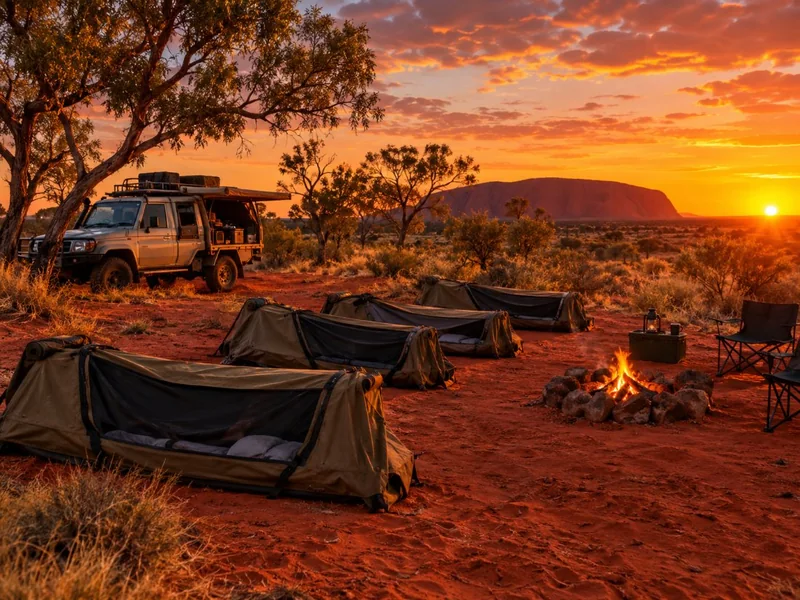
Uluru, Kata Tjuta & Kings Canyon in 3 Days
- Kata Tjuta guided walk, Uluru sunset and sunrise, the full Uluru base walk and the Cultural Centre
- Kings Canyon Rim Walk on day three, past the Lost City, the Garden of Eden and the Amphitheatre
- Two or three nights in swags with shared facilities, sleeping bag and all meals, per the listing